An incredible tale of Finnish design lands in Kaisaniemi
The heritage of Finnish design holds an amazing tale of curiosity and chance. This autumn, the story unfolds during the 2026 Helsinki Design Week in collaboration with Marimekko as the festival spreads out across the Kaisaniemi Botanical Gardens, turning our attention to encounters.
Helsinki Design Week, the largest design and architecture festival in the Nordics, takes place 28 August – 6 September 2026. This year, the theme encourages us to look for even the smallest shifts that have the ability to lead to something larger.
Something which Jan van Dijs, American designer, knows all too well. van Dijs with his company JR van Dijs focuses on historical rehabilitation. Work that is, according to van Dijs, a combination of passion and opportunity which began in Los Angeles among restoration of mid-century properties.
In 2017, van Dijs was honored as Preservationist of the Year, highlighting a long career in maintaining and restoring City of California’s Long Beach’s most treasured structures.
His favourite projects are those that take you by surprise and reveal something new. “One part of our process is to do a historical analysis of the project. Sometimes, what we are able to discover is a whole catalogue of work from an architect that has been misattributed or forgotten.”
“It is like opening a window to something we didn’t even know existed.”
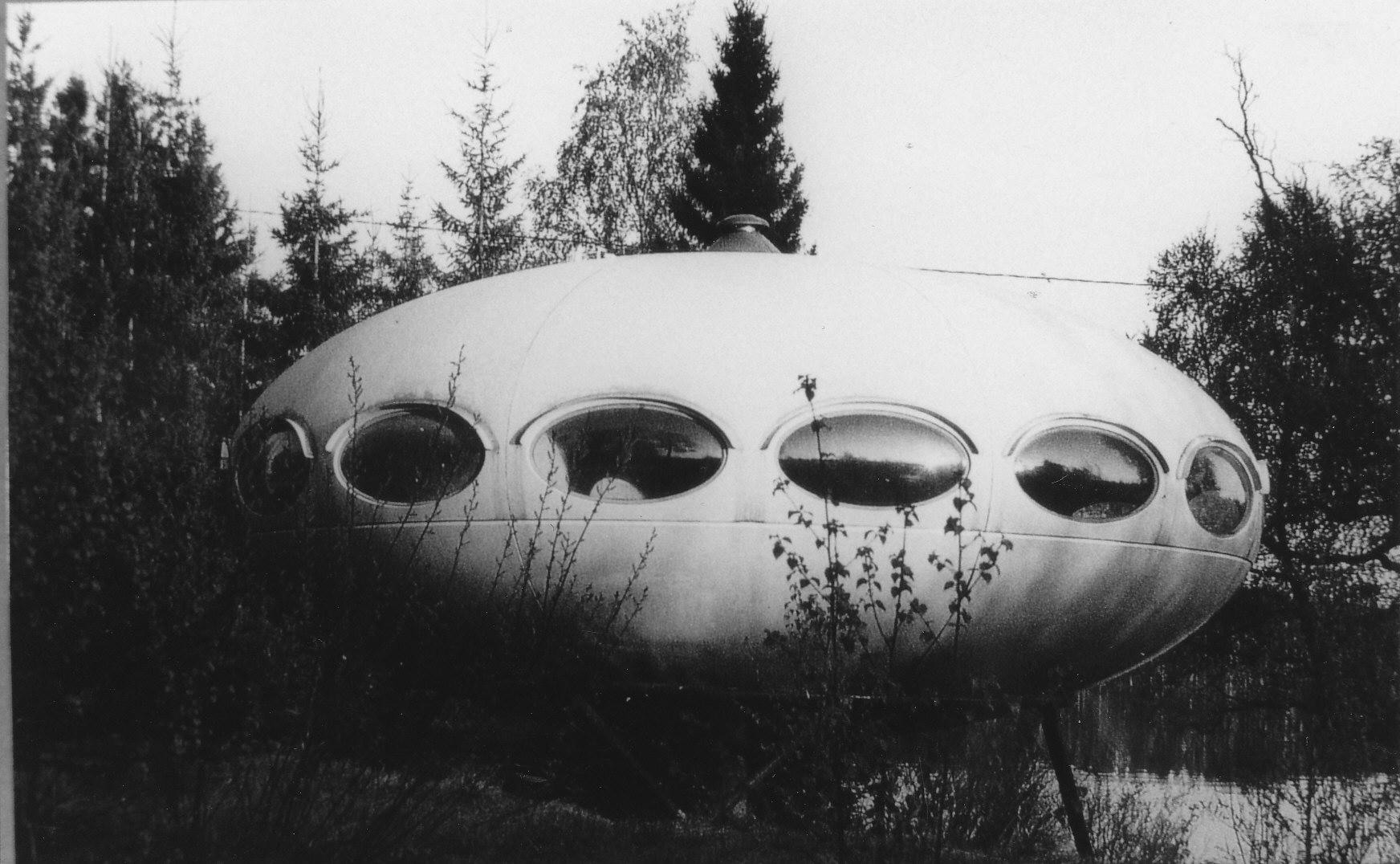
Very much like in the case of Finnish architect and designer Matti Suuronen, best known for designing the Futuro and Venturo homes in the Casa Finlandia series.
“I think here in the U.S. Suuronen’s work was mainly interpreted as being reminiscent of a flying saucer–and not much more than that. In the historical context his works were viewed as oddities rather than true architectural elements.”
“To me, his work is serious architecture. I feel like I can understand what he was trying to convey.”
And in Finland?
“I think in Finland, people only see his work revolving around Futuro but he did work before and after the series. The reality is that his legacy is larger than that one element and I believe there is a lack of knowledge concerning his work. The curiosity seems to end with Futuro.”
According to van Dijs, this relates to timing. After the Futuro was built during the late 1960s, taste changed quite dramatically. Suuronen’s work became a victim to that change. “Now we are seeing a resurgence in the taste of this time.”
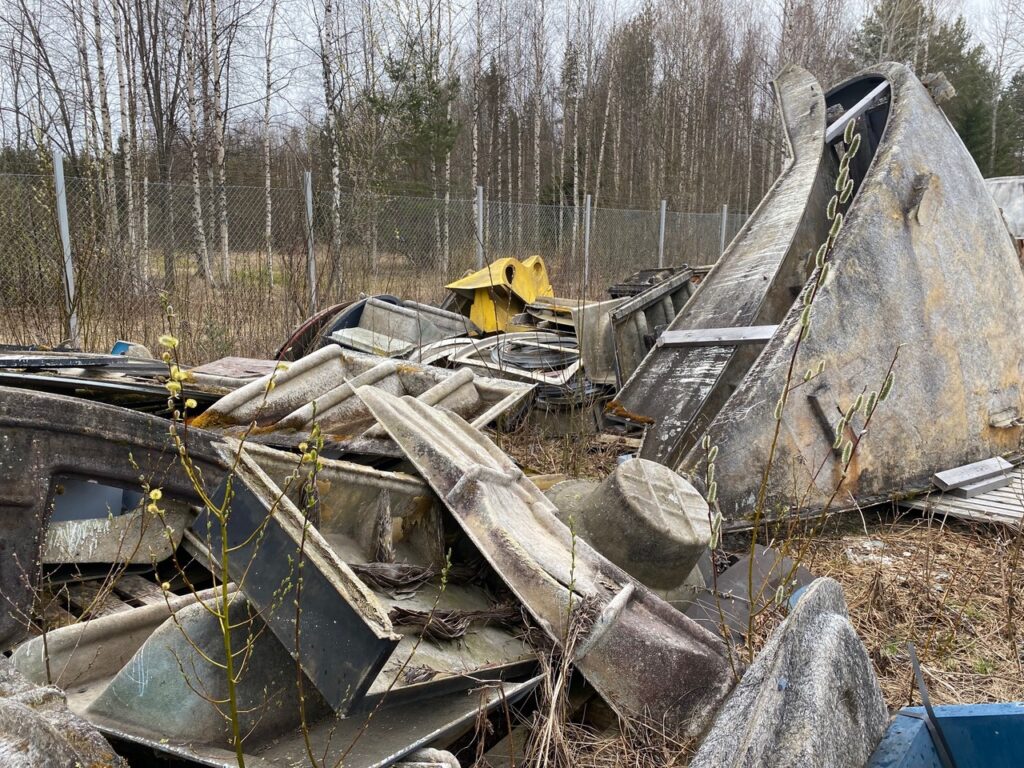
However, when the interest initially started to return, the Futuro had not aged well. Many were dirty and worn-out. “During that period of 30 years of obscurity, the interest in this concept of design had caused the buildings to deteriorate. There was a lack of care that could have been mitigated if we saw the value of them today.”
With no connection to Finland nor Suuronen, van Dijs, who spends half his time in the Netherlands, was able to come into contact with the Finnish architect’s legacy with the help of nothing less than social media.
“I knew of the Futuros through imagery but I knew nothing of Suuronen. I had never given it much thought until a friend reached out to me.”
This particular friend had come into contact with an odd ad on Facebook. A company executive based in Finland was selling something special. Molds. Original templates to Matti Suuronen’s plastic buildings previously owned by Finnish Polykem Ltd.
A company that had gone bankrupt in 1992 after which the contents of the company, including its assets were sold on.
“I am sure the molds were a book mark in the asset sheet and had just been stored away.”
Jyrki Aho, the executive of Exel Composites, a family company that had bought Polykem, was now selling the molds. He put up the notice on socials.
Aho was quite ill at the time and passed away only a few weeks after the transaction with van Dijs. “He was very engaged and it seemed to be important for him to accomplish the sale of the molds. Not for the money, I think money was secondary.”
The molds had been sitting in a paddock for over 50 years.
“I flew to Finland and his son drove us out to see the molds. ‘I couldn’t keep him from doing this’, the son said. That is how invested Aho was in the process even though he was not well.”
Aho eventually even contacted the family of Matti Suuronen so that negotiations over the licensing of the reproduction of the Futuro could begin. “We got to talking because there was no way I could have bought the molds without a permission from the family. We needed the licence.”
Initially van Dijs approached the family through email but the response was cautious. There had been many “crazy and grandious” ideas before, the family were being wary. An in-person meeting seemed obligatory.
“They needed to get a sense of who I was.”

Jan van Dijs, along with Jyrki Aho, met with the Suuronen family on May 12th 2024.
The vibe of the meeting was yet again guarded. The family seemed very respectful but plenty of honest communication was needed to convince them that what van Dijs was promising was indeed legitimate. “I was careful not to overpromise anything since we actually had no way of surveying the molds. There was no way of even knowing whether we could do this project.”
Van Dijs called the project an investigation. “I promised them that once we knew we could do the project, we would ask them for the licence.”
The Suuronen family agreed.
“The family has always been intrinsically involved in the project. No step has been taken without their knowledge.”
The project has been ongoing for two years.
In two weeks time, van Dijs will see a Futuro be reassembled on-site in Finland. “There were originally 20 buildings that were made. This is No. 21,” he says proudly.
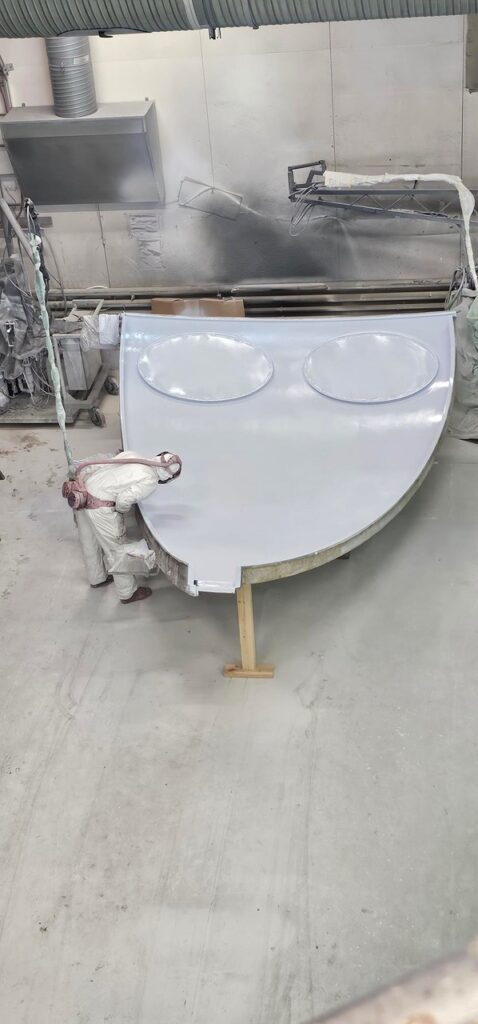
The Futuro No. 21. will land in the Kaisaniemi Botanic Garden in collaboration with Helsinki Design Week and Marimekko.
According to Marimekko’s creative director Rebekka Bay, the company has always walked the intersection of art, design, fashion, and architecture. To Marimekko, the Futuro house represents forward-thinking Finnish architecture where material, form and function work together to create something stunning. “That is also how we at Marimekko approach our own designs,” says Bay.
“On a personal level, I am interested in the relationship between form and environment–and how they might contrast. The idea of creating this visually impactful pod that could be placed anywhere while immediately becoming a celebration of organic shapes and constructed form is inspiring to me,” Bay concurs.
It will be the first time in 60 years for the people of Finland to see a brand new Futuro building.
One that carries the lineage of the original buildings designed by Matti Suuronen. Nothing has been added, nothing has been stripped away. The number 21. is an original.
“I hope people will be impressed. Looking at Futuro today, the building is all about hope. Matti Suuronen could not have created this element without a hopeful and positive view of the world. In the world we live in, that is quite spectacular.”