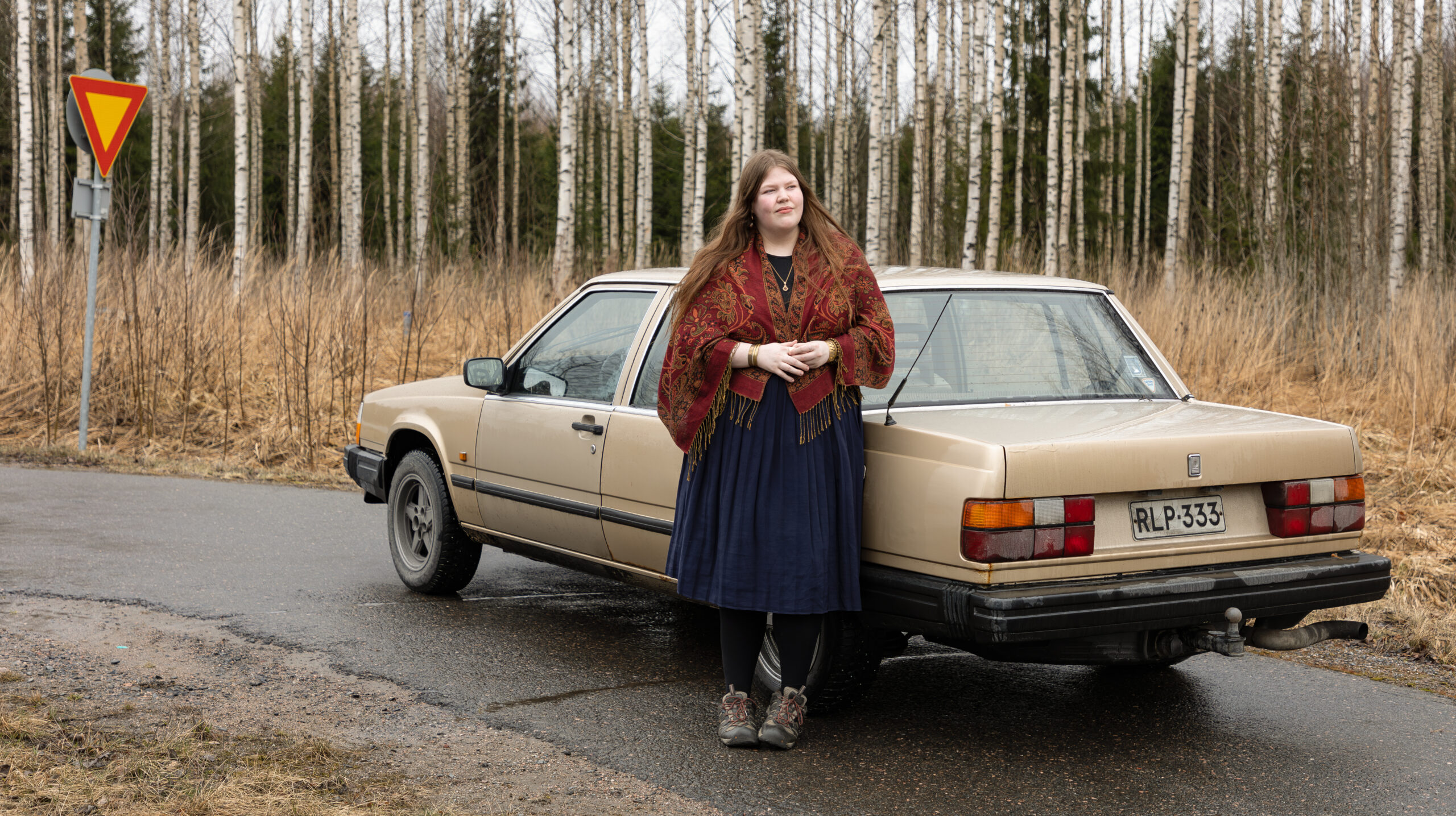
Country girl at heart Milja Liedes is the graphic designer behind this year’s look for Helsinki Design Week
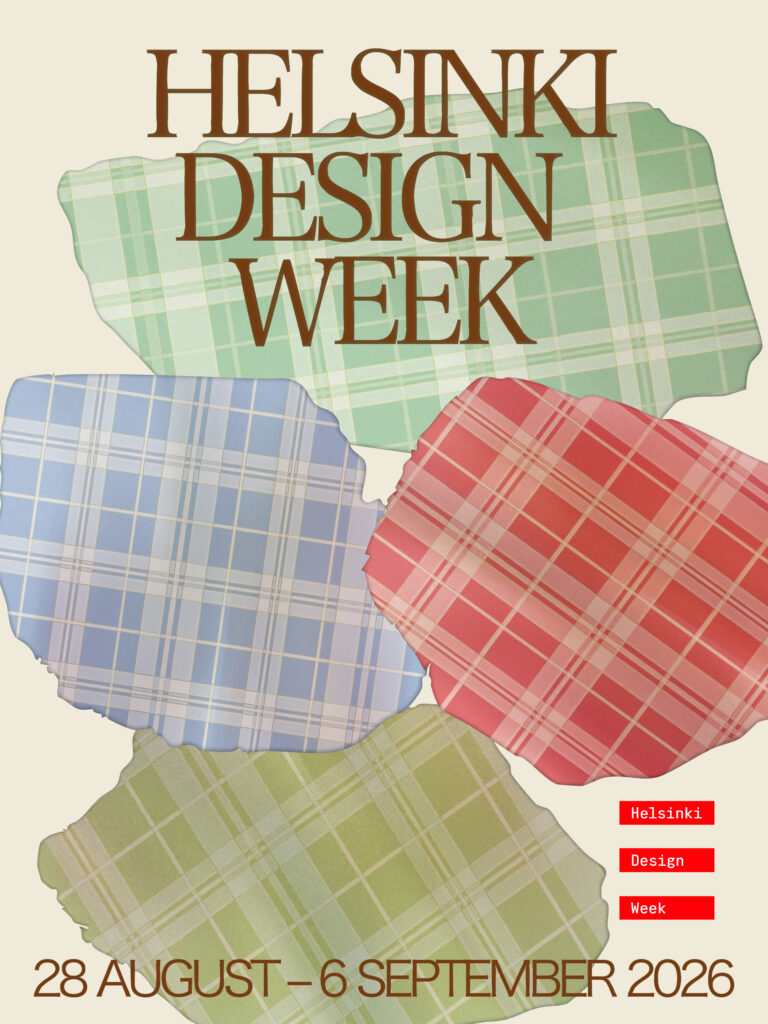
Milja Liedes, a student of LAB University of Applied Sciences in Finland, designed the visual identity for the 2026 Helsinki Design Week. The identity is built from pieces, originally inspired by the idea of foundation stones of brick and mortar. Fabric-like grid elements refer to this year’s theme, The Oncoming Other— differently coloured weft and warp threads intersect, blending to create a new shade. For this year’s design festival, Liedes especially hopes to attract visitors from outside the field.
The theme [the Oncoming Other] opens up to me especially through collectivity. I love working with others!
Milja Liedes
Hi Milja! You’re a graphic designer by trade, but what is your current practice like?
I’m currently working on a project for LAB University of Applied Sciences, designing the institute’s new visual identity. The overall concept is created by BOND Agency, and my role is to implement and apply the identity.
Ever since I was young, I’ve only used digital tools in my work. In lower secondary school I used to create digital illustrations and later studied media in vocational school. I had already given up using pen and paper back then. I never sketch by hand, for example. Everything is created directly in design software. As a designer, I am quite ambiguous but often can quickly see the direction a layout is heading.
I actually have quite a complicated relationship with education. The school environment never felt like my own and it wasn’t until I found graphic design that I discovered the right tools for learning and creating.
This kind of very pro-digital statement feels bold in today’s context. Could you elaborate on that?
By the time I entered the field, there was no longer any need to work by hand. But I love crafts! I enjoy making jewellery, especially simple metalworking. However, I still haven’t incorporated handicraft in my graphic design practice.
That said, I’d like to think that I am gradually weaving aspects of that into my work, especially now that there’s a clear digital backlash also within my own circles. You can see it everywhere, from art to people’s behaviour. In my field too, there’s a growing desire to create and see more manually produced material that doesn’t look so digital.
Interesting! The annual theme for HDW is The Oncoming Other. Any thoughts on that?
The theme opens up to me especially through collectivity. I love working with others! I actively seek feedback and want to hear people’s opinions. Their views are not always useful, of course, but the experience of sharing your work with other enthusiasts is always rewarding. It’s also enjoyable to solve everyday design problems together.
Who do you usually solve design challenges with?
Primarily, I talk things through with my classmates at school. We have been a close group since 2021, so we share a history of working together. We know each other well as designers, and feel that within the group it is safe to challenge one another. There are many strong personalities in the class, with each bringing their own unique perspective to discussions. It’s incredibly rewarding.
At its core, collaboration is about sharing a common passion with like-minded people. In that process, ideas accelerate, expand, and become more complex.
In many projects, I’m also supported by Anna Lavrenz.
Why do you think it’s important to celebrate design at festivals?
It’s certainly valuable for people in the field to see each other’s work and have discussions. But I think that it is even more important for non-designers to get inspired – and possibly discover their own potential. Events like HDW make it possible for everyone to experience something new and encourage people to think bigger.
I come from a small village called Launonen, where, growing up, there was no representation for the kind of work I wanted to do in the future. Design events offer a chance to see different types of work and help visitors discover things they might be interested in.
I personally experienced HDW exactly this way for the first time. In 2016, the events were held inside a donut-shaped structure built around a statue in central Helsinki. The installation made headlines and reached remote areas like my little town.
I had never even heard of design before or thought that it could be a part of my future. It all felt so strange, exciting, and fascinating. Suddenly, I felt like design was calling me.
That is why I, this year, am thinking especially about young festival visitors and first-timers. The event has the ability to become particularly meaningful and inspiring to people from outside the field.
In the end, for me, design that reaches far and wide is very close to my heart.